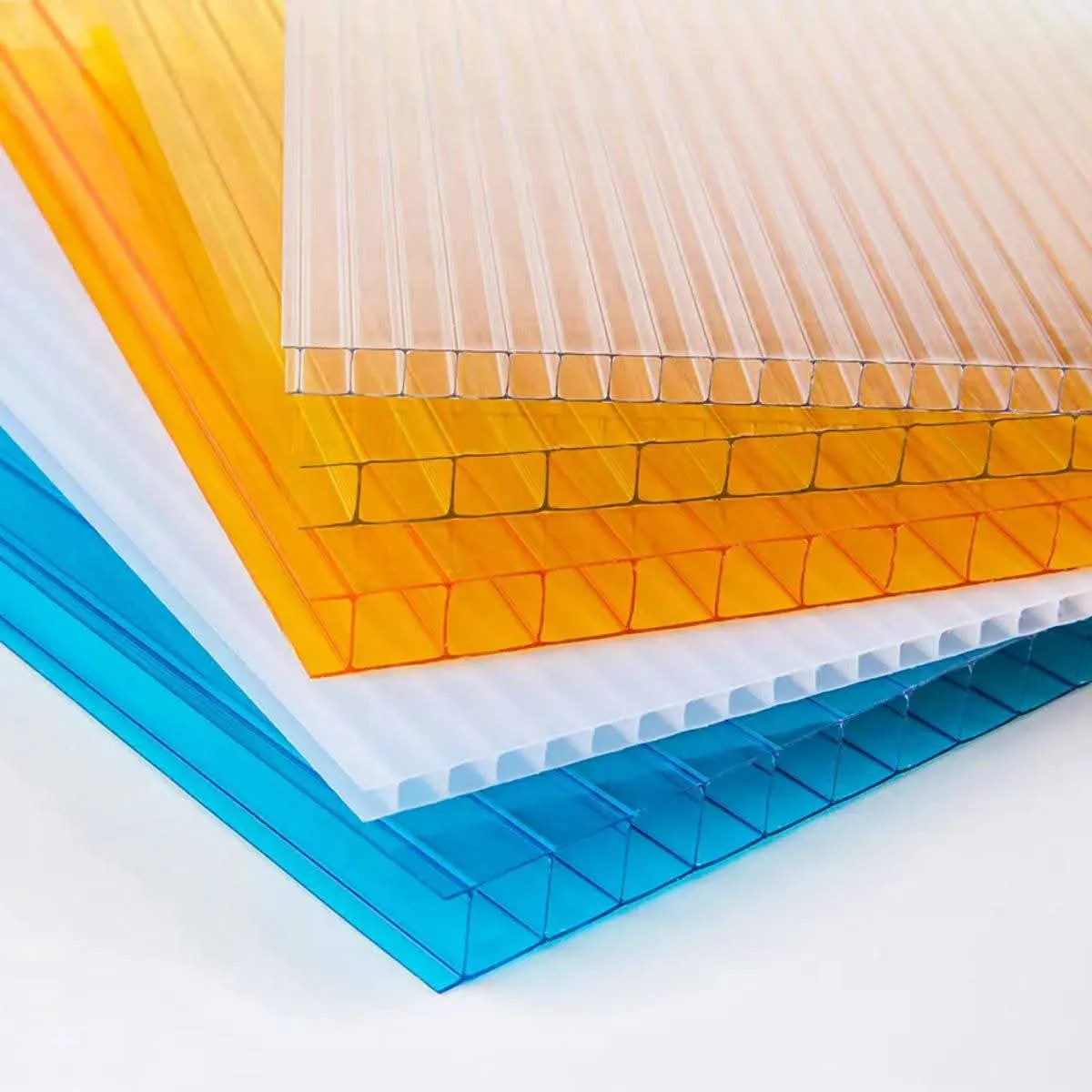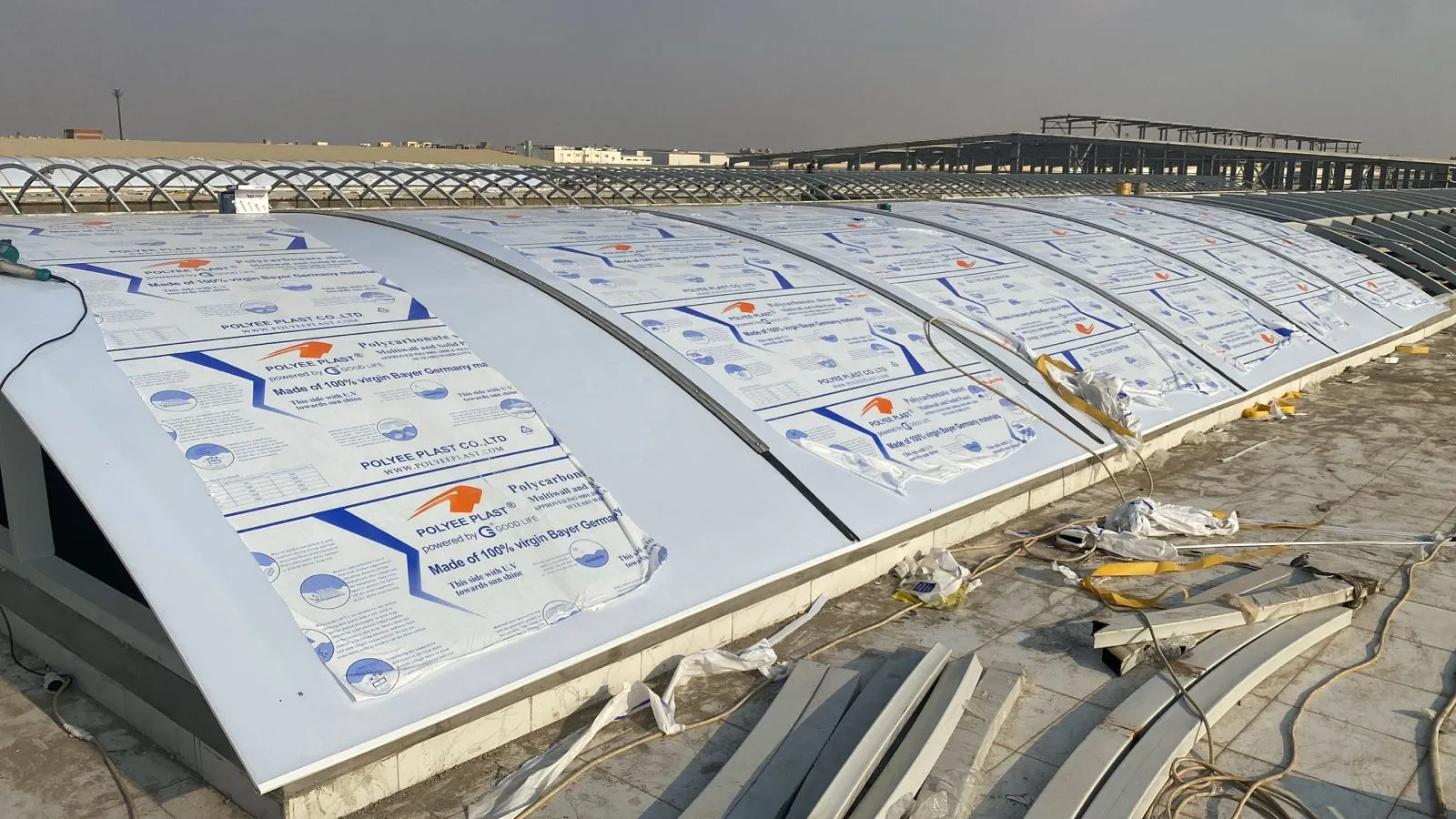
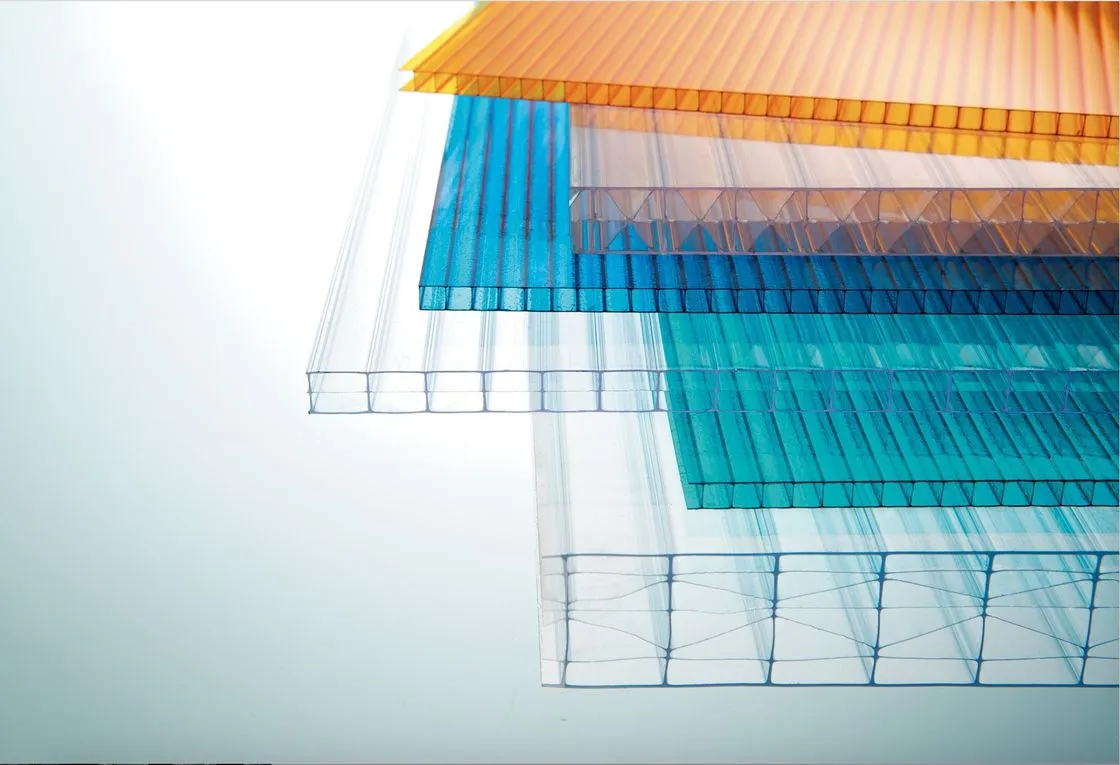
Thickness is one of the most important decisions in any polycarbonate project. A sheet that is too thin can sag or suffer in the wind; one that is too thick costs money you do not need to spend. Here are the rules of thumb we use at Polyee Plast when advising clients.
What determines thickness
- Purlin spacing (the supports under the sheet): the wider the spacing, the thicker the sheet you need.
- Location: an exposed roof faces very different wind loads than a small canopy against a wall.
- Required lifetime: long-life projects justify the premium UV-protected grade.
- Budget: our economy grades offer thinner sheets for light-duty use.
Our recommendations for multiwall sheets
| Thickness | Suitable for |
|---|---|
| 4 – 4.5 mm | Partitions, light coverings, small greenhouses, short purlin spacing |
| 5.5 – 6 mm | Standard canopies, carports and most residential uses |
| 10 mm | Large roofs, factories, stadiums and high-wind locations |
Our recommendations for solid and embossed sheets
| Thickness | Suitable for |
|---|---|
| 1.3 – 2 mm | Cladding, decoration, interior partitions, signage |
| 2.5 – 3 mm | Decorative canopies, doors, shower enclosures, façades |
| 4 – 6 mm | Windows, safety barriers, machine guards |
| 8 – 10 mm | Safety glazing, high-impact areas |
These tables are guidance only. Correct purlin spacing depends on the structural design and local loads — check with your engineer, or contact us and we will help.
A final tip
Do not choose thickness on price alone. A slightly thicker sheet can reduce the number of purlins you need, which may save on steel and offset the price difference.